

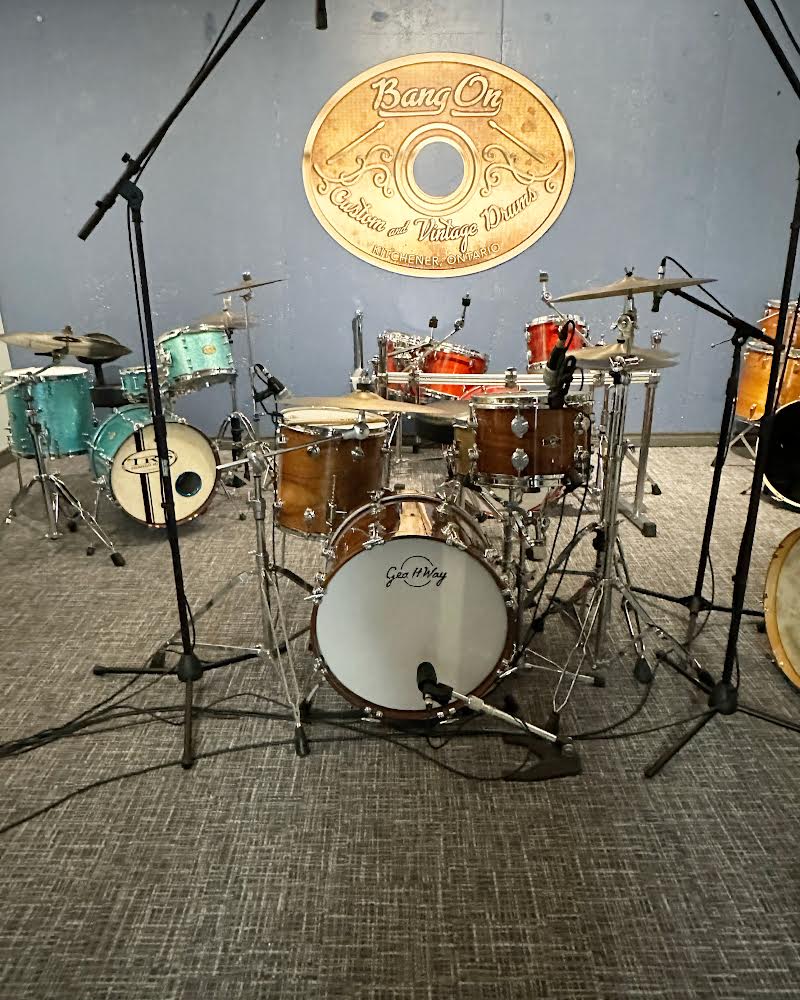
There’s no question playing live gigs are always a thrill. Being on stage with your bandmates, making music and feeling the energy of a crowd, is a rush. But, what happens when those original tunes are begging to be recorded?
Here is a run down of things to think about when heading into the studio as a drummer.
#1 Critique Yourself
Don’t let the studio recording be the first time you hear yourself play, because you might just say “oh crap I never realized I did that”! By that time, it will be too late. Record yourself while practicing and listen back to it… This is an amazing way to improve your playing if you’ve never done it before, because you’ll learn things about your drumming that you never knew. It doesn’t matter what you use to record yourself – an old tape recorder, your phone, even your built-in laptop microphone. Even better, video record yourself so you can see your movements around the kit.
When you’re listening back, think about:
- The balance between each drum & cymbal – is something overpowering the rest of the kit? If so, work on your dynamics and volume control. Example: Snare Hits should be the same volume each time.
- The timing and flow of your beats – is everything consistent and does it groove?
- Your fills – do you go off time when doing fills (especially the more complex ones)?
- Your drum sound – drums are a unique instrument in that so many elements affect their sound. Heads, Sticks, Bearing Edges, number of plies, wood, metal or other materials. You may want more than one snare on the session for different sounds.
- A good mic location for when you’re drumming alone is on a small table behind your throne. Record yourself playing alone and with the rest of the band… You’ll want to critique your own playing, and also check that your beats actually fit the song.
#2 Be Prepared with Both Equipment and Song Preparation.
When working a lot in studio environments, good functioning equipment is key.
Be sure that hardware is sturdy, bass drum pedals and/or hi hats stands can’t have squeaks or rattling parts. Drum Heads have to be at the very least, lightly used if not ideally new. Remember, the engineer will provide you with feedback should he/she ask for dampening etc.
Heads should be tuned and overtones taken out. Refer to our earlier Article on Tuning Drums, should you struggling with getting a good sound out of your drums. Carry extra sticks, moon gel, drum key and for certain…a spare snare.
In addition to functioning gear, its is critical that you have well rehearsed parts. Rehearsing the songs prior to studio playing is key. Both with bandmates (if that opportunity is afforded to you) and on your own. Map out sections, chart your parts and be prepared to clarify anything prior to arrival. Studio time is expensive and not the place to rehearse. Be sure that you are warmed up as you will be expected to play each track more than once. Endurance is a necessity in the studio.

#3 Get Comfortable Playing to a Click Track (Metronome)
Get used to playing to a metronome, both solo and with the rest of the band. There are two important reasons for this:
- You’ll find it impossible to record to a metronome if you’ve never played with one before. Don’t wait until you’re at the studio to learn to play with a click!
- As a band, you’ll naturally flow off tempo and sometimes rush or slow some parts if you never use a metronome… When you do record with a click, the track can feel wrong if you’ve never learned to play it in time. Importantly, you’re not going to be as comfortable playing it in the studio because of this. Add a click track to some of your rehearsal sessions and you might be very surprised with the results.
It’s important to say that it is not essential to record drums to a click. As a drummer you should absolutely be able to do it, but a lot of amazing albums are made without one. Sometimes a natural variation in tempo is considered a positive rather than a problem… Just make sure you’re avoiding the click for the right reasons, not just because you can’t play with one.
Note that if you don’t record to a click, you might limit yourself to using a single whole take of a song… You can’t splice in parts from different takes if you mess up, because they might have a noticeably different tempo. Not using a metronome can also make it more difficult to do overdubs later, especially if the tempo varies a lot. If you’re recording the whole band at once, it’s a lot easier to work without a click track. Usually the band will keep itself in time, and can easily and more naturally react to slight tempo changes. If you’re recording the drums alone, a metronome will probably be a requirement.
Most studios will give you a click by default. It’s recommended you use one, unless you are Jeff Porcaro reincarnated and have an amazing sense of time.
Closing Thoughts…
A studio can seem ominous or intimidating. It’s just a means to document your creation. Relax and enjoy the experience. Don’t put unrealistic expectations on yourself.
Track an easier song first. Don’t jump into something you’re not comfortable with or is too complex. It can take time getting used to the recording environment, especially if you’re new to it, so start easy. Once you’re warmed up and more comfortable, you’ll be able to record the difficult drum tracks with a lot more confidence.
Be sure that you are tuned up and that the batter heads are properly stretched. Tune everything before you start recording drums for each song. After that, only do minor adjustments if your kit starts to go out of tune. This ensures a uniform sound from take to take.
Finally have fun. Be objective when listening back. Remember, people listening won’t know how many takes it took or what was “punched in” to correct a mistake. Try and listen to your work in the context of the song and as an impartial listener.

DON’T FORGET; Bang On Drum Shop also has a studio for rent to remotely record tracks for your songs. Whether it’s you, a drummer you know or one of our players, we are happy to help you capture the rhythms you need to make that tune a hit.
Call 519-580-1554 or email sales@bangondrums.com for rates and availability.


Good insights into recording Shan. I believe your studio drum setup could be useful to many and I’m glad to know it’s available.